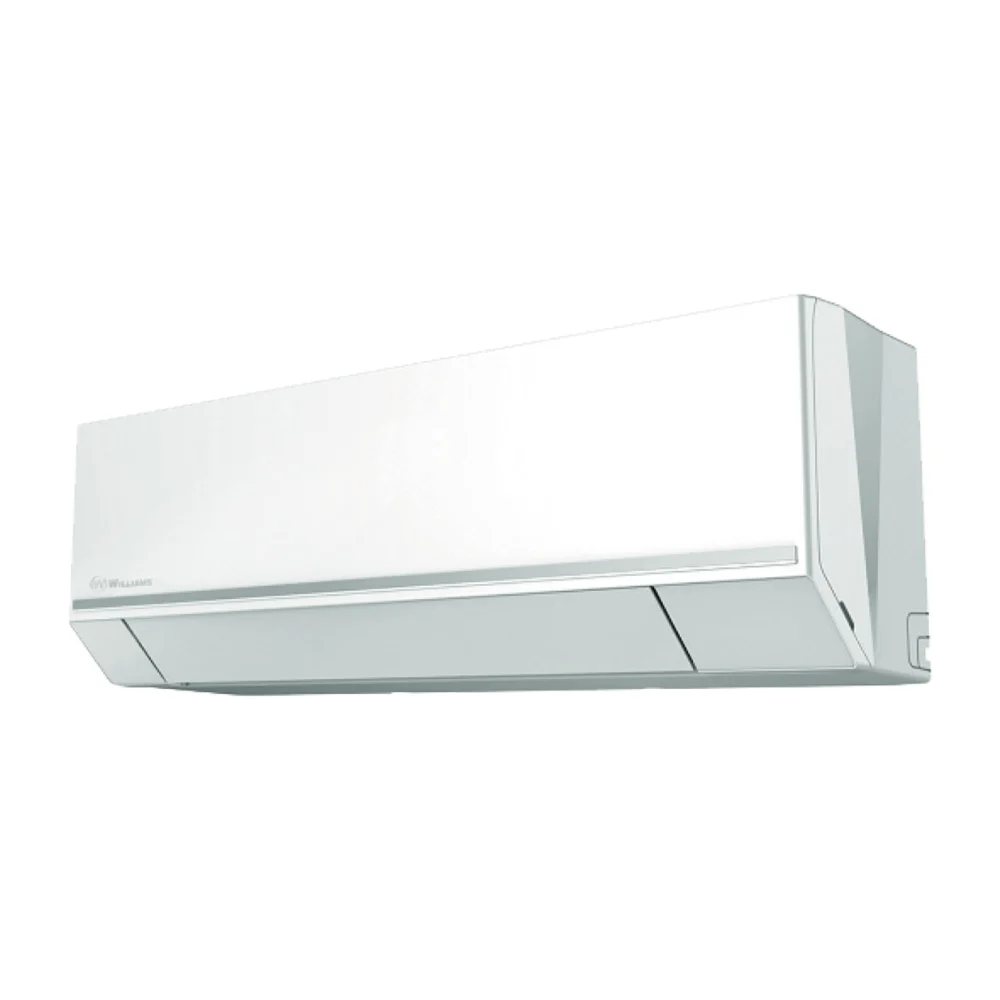

Every June the same offers appear: a wall-mounted split for a couple of hundred pounds, fitted next week. It is a genuine machine and it will genuinely make a room colder. The question is what happens in year three.
A non-inverter unit runs its compressor flat out and then stops. An inverter unit modulates, running slowly for long periods, which is where the efficiency comes from. Across a British summer the difference between a SEER of 5.1 and a SEER of 8.5 on a 12,000 BTU unit is roughly £70 to £95 a year at current tariffs — and that is before the heating season, where a good SCOP will beat gas on running cost in a well-insulated room.
Then there is the compressor. Cheap units use fixed-speed compressors that start under full load thousands of times a summer. The premium platforms soft-start and rarely stop. It is the single biggest determinant of whether the machine is still working in year ten.
Our advice is unromantic: work out how many hours a year the unit will actually run. Under 200 hours, buy on price. Over 400 hours, buy on SEER and SCOP, because the difference will pay for itself twice over before the warranty expires.
Want a second opinion on your own place?
Send us a photo of the room and its dimensions. We will tell you what we would fit and, just as often, what we would not.